
Fits the Porter-Cable 352VS. Connects to Ridgid HD0900 Wet/Dry Vac.
Porter-Cable 352VS to Ridgid HD0900 Dust Adapter.
Not your setup? Change the vac or change the tool.
Ships in 3 to 5 business days.
3D printed in PETG and made to order. Shipping is a flat $7.95 anywhere in the US.
This one fits the Porter-Cable 352VS. It presses on by hand and holds, so there is nothing to clamp or tape.
How to measureWrong part or a bad print? Send a photo and we reprint it or refund you. You never ship anything back. How refunds work
- Made to fit your toolFriction fit, no clamps
- Made in the USAPrinted to order
- Flat $7.95 shippingOne rate, anywhere in the US
- PETG, not brittle PLABuilt for the shop
Specs and fit
Fit
What You Get
- One PETG adapter, printed to order to fit the Porter-Cable 352VS
- Friction fit on both ends, so it pushes on without tools
- A 47.6 mm end for your Ridgid HD0900
- No clamps, tape, or glue needed
How it fits
- 1
Push the small end onto the Porter-Cable 352VS dust port.
- 2
Slide your Ridgid HD0900 hose onto the other end.
- 3
Twist a little so both friction-fit ends seat.
- 4
Run the tool and the dust pulls straight into the vac.
Settle the size
Two ways to land on the right number.
1. Measure it yourself
Calipers or a ruler in millimeters. That number is what the builder asks for, and we print to it.
How to measure both ends
First look at the port on your tool. Most are an opening you can put a caliper tip inside. Some are a stub that sticks out, the kind a hose slips over. The two need different numbers, so check which one you have before you measure.
If the port is an opening, measure the inside. Put your calipers in the opening and open them until they touch both walls. That inside number is the one our parts are built to, because our adapter goes into the port.
If the port is a stub the hose slips over, measure across the outside of the stub. Our adapters today are male on both ends, so they go into an opening rather than over a stub. That means a stub port may need a different part than the ones we list, so ask us before you order.
Do the same at the vacuum end. Measure the inside of the open hose or duct end. With both numbers written down, the chart and the builder both know what to show you.
2. Put your setup on the record
Give us two numbers and we build to them.
See how it seats
Every adapter we print seats the same way, this one included. The picture below is a different size, cut down the middle, so you can see what happens inside the hose. The stub, the stop ring, and the gap do not change from size to size. Only the widths do. The part you get is not cut.
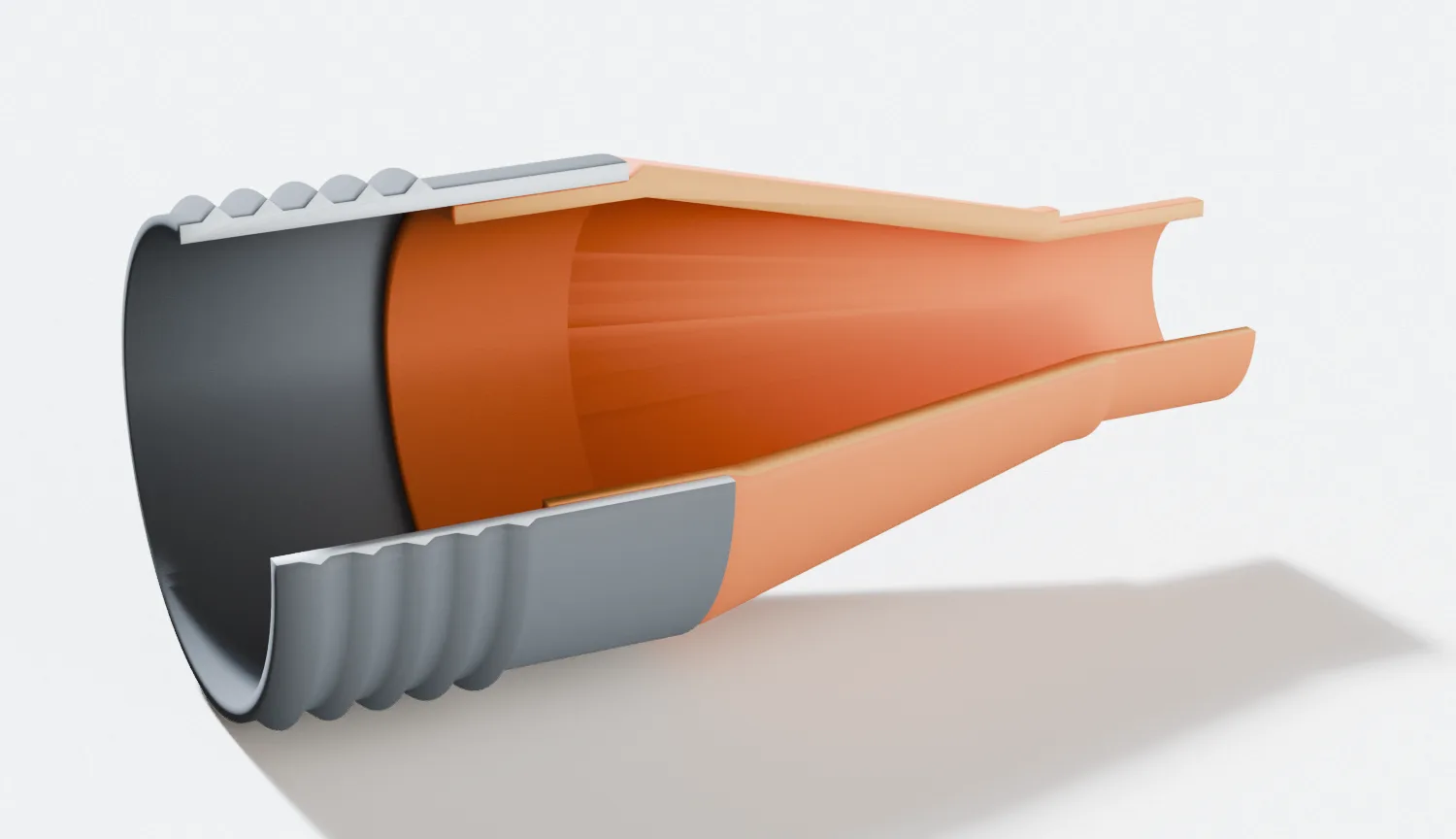
- 01Your hose
- The grey ribbed part. It stands in for any shop hose.
- 02Our adapter
- The orange part. It runs down inside the hose.
- 03About 25 mm in
- The stub slides about 25 mm into the hose. That is the same on every size we make.
- 04A ring stops it
- The stub steps up to a ring wider than the hose. The hose lands on that ring and goes no further.
See the joint up close, and the gap
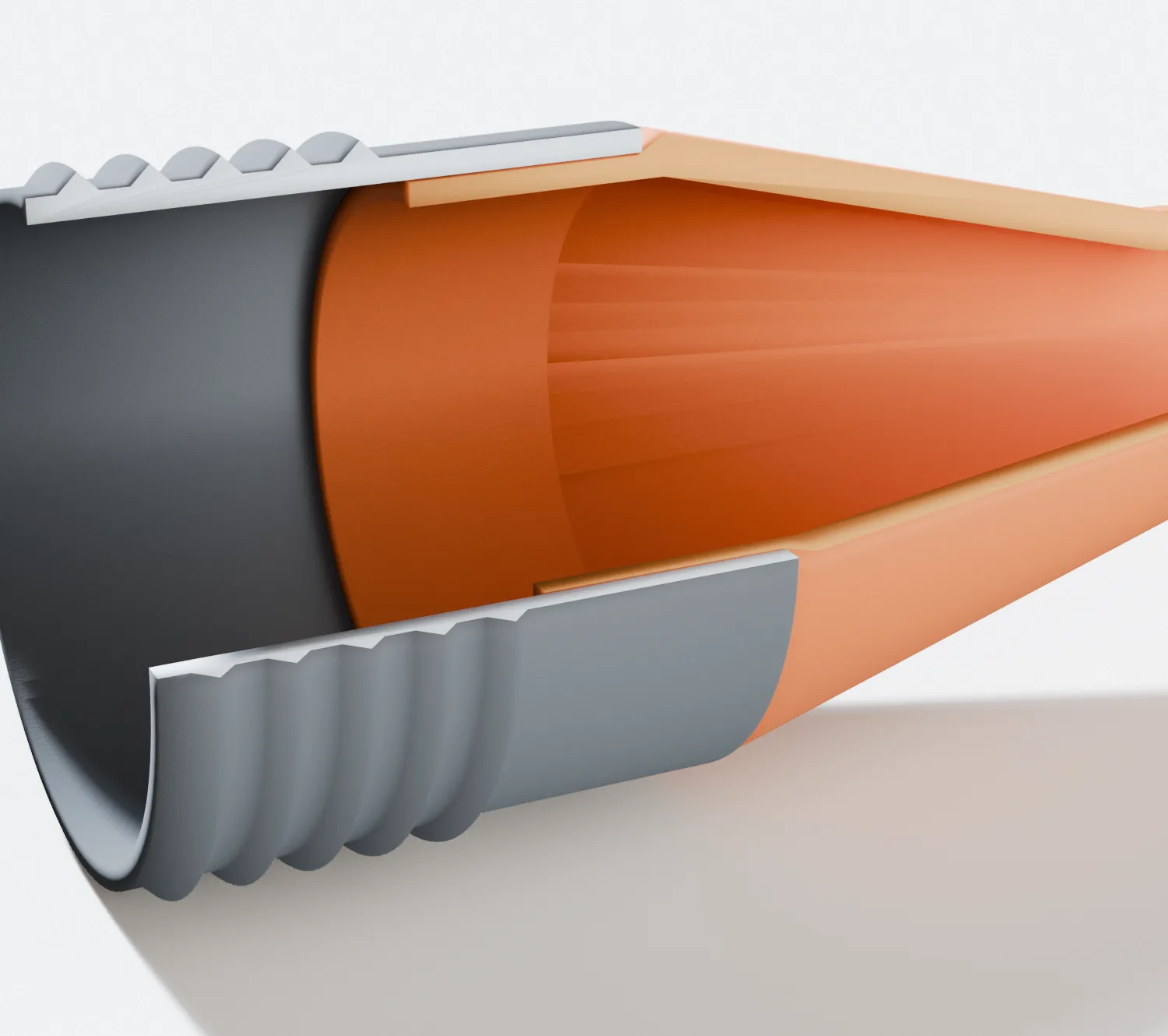
The joint, up close
You can see the orange stub running down inside the grey wall, and you can see the step where it stops. Push the hose on and it lands in the same spot every time.
The hose in the picture is a stand in. Yours will look different on the outside. What matters is the width inside, and that is the number we build to.
The gap you cannot see
Zoom in on the wall and a thin dark line shows up between the two parts. That gap is on purpose. It is what lets the stub slide in by hand.

Slide the strip sideways to see all of it.
- Hose wall
- The light band across the top.
- 0.3 mm gap on each side
- The thin dark line under it. It runs the whole way the stub is buried.
- Adapter wall
- The tan band below the line. It is 2.5 mm thick.
- The stop ring
- The step near the right end. That is where the hose lands.
- The buried tip
- At the far left the tan band runs out. That is the end of the stub, deep inside the hose.
0.3 mm is about as thick as three sheets of paper. Small enough that the connection holds. Big enough that the stub still goes in.
These pictures are made straight from the file we print, so the shapes are the real shapes. They are not photos, and they are not drawings by hand. The colors are picked to keep the two parts apart on screen. Your adapter prints in the color you pick.
The joint, up close
You can see the orange stub running down inside the grey wall, and you can see the step where it stops. Push the hose on and it lands in the same spot every time.
The hose in the picture is a stand in. Yours will look different on the outside. What matters is the width inside, and that is the number we build to.
The gap you cannot see
Zoom in on the wall and a thin dark line shows up between the two parts. That gap is on purpose. It is what lets the stub slide in by hand.
Slide the strip sideways to see all of it.
- Hose wall
- The light band across the top.
- 0.3 mm gap on each side
- The thin dark line under it. It runs the whole way the stub is buried.
- Adapter wall
- The tan band below the line. It is 2.5 mm thick.
- The stop ring
- The step near the right end. That is where the hose lands.
- The buried tip
- At the far left the tan band runs out. That is the end of the stub, deep inside the hose.
0.3 mm is about as thick as three sheets of paper. Small enough that the connection holds. Big enough that the stub still goes in.
These pictures are made straight from the file we print, so the shapes are the real shapes. They are not photos, and they are not drawings by hand. The colors are picked to keep the two parts apart on screen. Your adapter prints in the color you pick.
Build the rest of the run
Same two sizes, a different shape. Each one opens with your numbers already set, so you are not measuring twice.
Common questions
Will this fit my tool?
Yes. This one is made for the Porter-Cable 352VS dust port. It presses on by hand and grips on its own, and the other end drops onto Ridgid HD0900 Wet/Dry Vac.
Do I need clamps or tape?
No. Both ends are a friction fit, so they push on and grip on their own in most setups. If your hose is worn, a wrap of tape helps.
What is it made of?
PETG. It handles shop heat up to about 80C, shrugs off common shop solvents, and takes drops without cracking like brittle PLA.
Do you sell the design file?
No. We sell the finished part. Each one is printed to order in PETG and ships from the US.
What if it does not fit right?
Tell us what happened and we will sort out the right part for you. If a part shows up with a print defect we will reprint it.
Not your setup?
This adapter fits the Porter-Cable 352VS paired with Ridgid HD0900 Wet/Dry Vac. If you want the same tool with a different vacuum or duct size, the configurator can rebuild it in a few clicks. Your tool stays picked, you swap the output.