
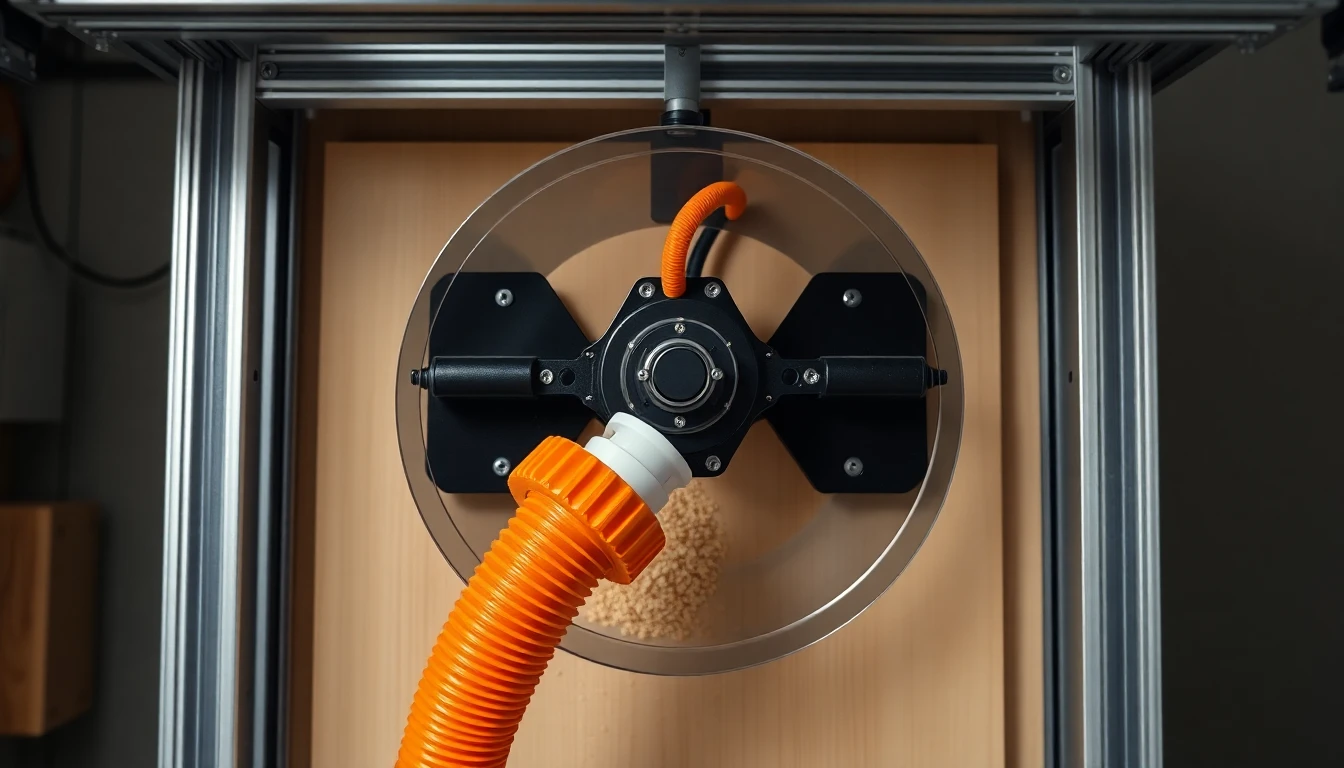
Hobby CNC routers throw a surprising amount of dust. A 1/4 inch end mill cutting plywood at 18,000 RPM produces a steady stream of fine chips and powder. Without a dust shoe, the chips land everywhere. With a dust shoe, the chips go straight into a shop vac. The setup works.
The problem is the connection between the shoe and the vac. Shoes come with different hose ports, and shop vac hoses come in different inside diameters. Nothing lines up by chance. This guide covers how to choose a dust shoe and how to size the printed PETG adapter that connects it to your vac.
Match the Dust Shoe to Your Spindle
Hobby CNC machines use a range of spindles, from trim routers to small brushed DC spindles to larger water-cooled or air-cooled spindles. A dust shoe has to fit around the spindle you actually mount. Measure the spindle body and check it against the shoe maker's stated fit before you buy. If you swap to a larger spindle later, you will likely need a wider boot.
Measure the Dust Shoe Port
Stock dust shoes vary a lot, and many desktop CNC machines ship with none. Many owners 3D print a shoe or buy one from a third party. The port on the shoe is often small, and a standard 2-1/2 inch shop vac hose dwarfs it. The step from a large hose down to the shoe port is the connection most owners fail to set up correctly.
Do not trust a chart. Shoe ports change from one shoe to the next. Measure across the inside of the port opening with calipers or a ruler. If it is a stub, measure across the outside. Then measure the end of your hose.
Three numbers matter when picking a dust shoe and adapter for a CNC: the spindle diameter, the dust shoe port, and the shop vac hose inside diameter. Get all three and the system connects. The size guide shows how to measure, and the port size pages are a starting point if you want to compare. The 1-1/4 in. size page is one place to look for small ports.
A strong pattern shows up across the budget CNC market: small spindle, small dust shoe port, no path to a standard vac without an adapter.
A printed PETG adapter sized for the exact dust shoe port and the exact shop vac hose closes the gap. Our hose size adapter guide shows how to match a hose to a port. When you have both numbers, Build My Adapter.
Brush Skirt vs Rigid Lip Dust Shoes
Dust shoes come in two styles. The brush skirt has soft bristles that ride over the workpiece. The rigid lip has a hard plastic edge that sits just above the surface. Each has trade-offs.
- Brush skirt: Better dust capture on flat work. The bristles seal against the workpiece even when the shoe rides up over a clamp or screw head. Worse on 3D contours because the brush drags across the carving.
- Rigid lip: Better for 3D carving and pocket work. The lip clears the work surface so it does not drag on raised features. Worse on flat work because the gap between the lip and the surface lets dust escape.
Most hobby CNC owners run a brush skirt for 90% of work and swap to a rigid lip only when carving deeper 3D shapes.
Trim Router vs Spindle Dust Collection
The dust collection picture changes based on what you put in the gantry.
- Trim router (Makita RT0701, DeWalt DWP611): Most common starter spindle. The router has its own fan that blows chips outward. A good dust shoe handles this well.
- Brushed DC spindle (775, 500W): Quieter and weaker. Less fan blow, but also less power. A small dust shoe works fine because the chip volume is low.
- VFD spindle (800W, 1.5kW, 2.2kW): Water-cooled or air-cooled. Far more powerful, longer cuts, much larger chip volume. You want a bigger dust shoe and a high-CFM vac.
For more on handheld router dust collection, see our router dust collection guide. The trim routers used on CNCs are the same models people use handheld.
Picking a Shop Vac CFM for CNC Work
CNC dust collection needs steady airflow, not peak suction. Three things matter for the vac:
- At least 100 CFM at the hose end: Less than that and the dust shoe lets fine powder escape, especially on MDF and plywood.
- HEPA or fine-dust filter: MDF dust is a carcinogen. A standard shop vac filter passes the finest particles. A HEPA filter or a cyclone separator with a HEPA-rated bag keeps the air safe.
- Long enough hose: A CNC gantry moves through a 2 to 4 foot envelope. You want hose slack so the vac can sit on the floor without binding the machine.
Common picks: Festool CT MIDI, DeWalt DWV012, and the Fein Turbo II. Any of them paired with a printed PETG adapter sized for your dust shoe closes the gap. The Fein and DeWalt both have auto-start outlets that fire the vac when the CNC starts a job, which is useful when running long unattended cuts.
Why PETG Beats PLA for CNC Dust Boots
CNC dust shoes ride right next to a high-RPM spindle. Heat builds up at the bit and radiates through the shoe. A PLA dust shoe or PLA adapter starts to soften at 60 degrees Celsius. PETG holds up to 80. The gap matters most on long cuts where the spindle has been running for an hour or more.
PETG also shrugs off the shop solvents used to clean a CNC after a cut. Brake cleaner, isopropyl alcohol, and Simple Green all eat PLA over time. PETG does not care. For more on why PLA and ABS lose out at the port, see why GulpDust adapters are PETG, not PLA or ABS. For the full reason we use PETG on every adapter, see why we use PETG for dust collection.
One more cross-tool note: the same shop vac and adapter strategy that works for a CNC also works for an angle grinder, a trim router, or a sander. If you already have a dust shoe setup for one machine, a single printed adapter swaps the connection to the next. See our angle grinder dust shroud guide for the same idea applied to concrete work.
CNC dust collection works when three parts line up. The dust shoe matches the spindle. The vac pulls enough CFM. The hose connects without leaks. The shoe and the vac are usually fine. The hose is where most setups fail. A printed PETG adapter closes the gap.
If you tell us the measurement across your dust shoe port and the measurement across your shop vac hose, we will print you the adapter that connects them. Made in the USA, printed to order and shipped from the USA.