
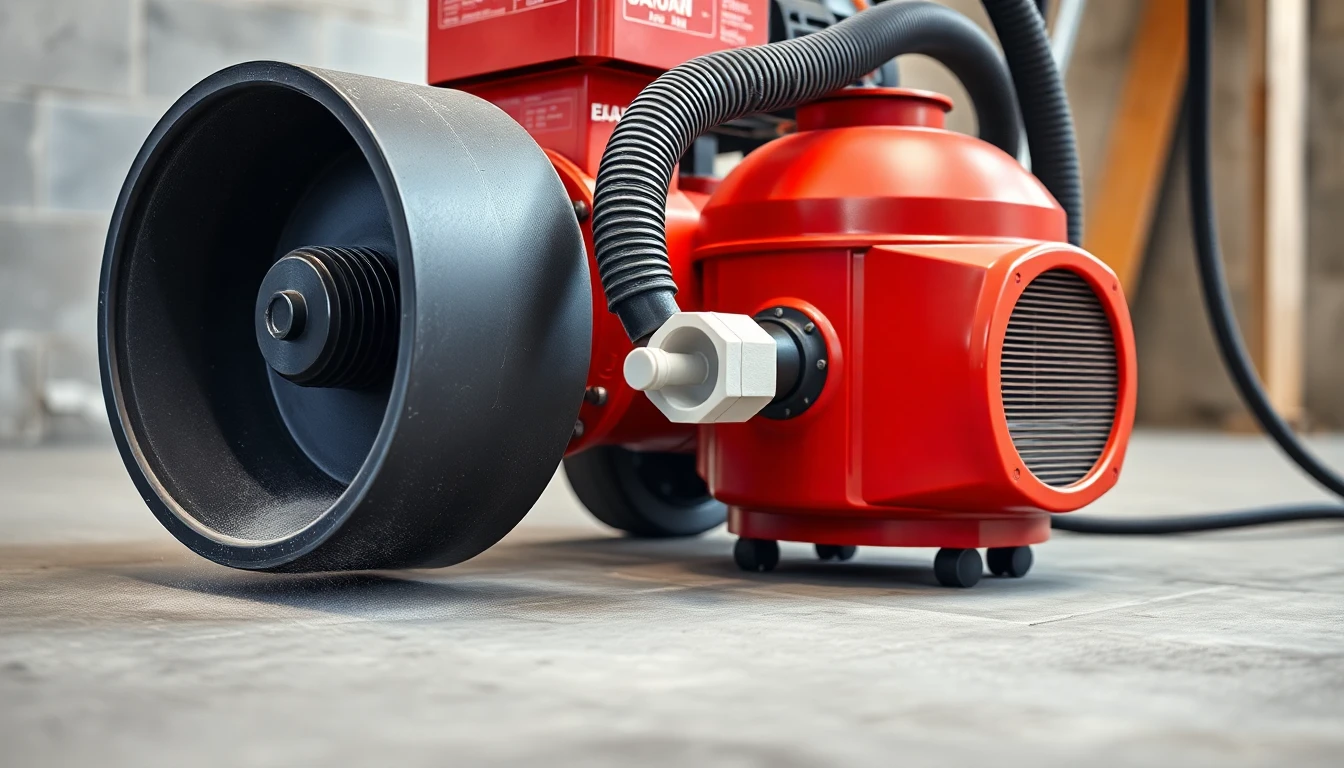
Surface grinding concrete looks simple. Run a diamond cup wheel over a slab, knock off the high spots, prep the floor for sealer or epoxy. The dust is the problem. Concrete is 25% silica by weight. When the wheel hits the slab, the silica goes airborne in particles smaller than 5 microns. You cannot see them. You can breathe them. They scar lung tissue and the damage is permanent.
OSHA Table 1 says contractors must use either a wet method or a HEPA vacuum paired with a rated shroud when grinding concrete. Most pros pick the dry HEPA path because it works indoors and does not flood the slab. The trick is connecting the grinder shroud to the vac hose. Shroud ports are not standard. This guide covers how to set up a hand-held or floor grinder and the printed PETG adapter that closes the gap.
Be clear on what the adapter does. A GulpDust adapter connects the shroud hose to your vac hose. That is all it does. It is not a shroud. It is not a HEPA filter. It does not make your setup OSHA compliant. It does not set the airflow, the filter grade, or the respirator the job needs. Those parts are on you. Silica work is serious, so check them before you grind.
Measure Your Shroud Port
Concrete grinder shrouds come with several port styles, including lock-on bosses made to pair with the same maker's vac. If you own the matched vac, the connection may be plug and play. If you do not, the boss will not fit a 2-1/2 inch shop vac hose. Do not trust a chart. Shroud ports change from model to model, and a wrong guess on a silica job is a leak.
Do not trust a chart. Tool makers change port sizes between models, and sometimes within one line. Measure across the inside of the port opening with calipers or a ruler. If the port is a stub, measure across the outside. Then measure the end of your hose. Give us the two numbers and we print the adapter to them. The size guide shows how, and Build My Adapter takes it from there.
If you want a starting point, the port size pages show what we print at each size: the 1-1/4 in. size page, the 1-1/2 in. size page, the 35mm size page, and the 2 in. size page. You can also see the brand pages for DeWalt, Bosch, and Hilti. Your own reading is what decides the part.
Handheld vs Floor Concrete Grinder Dust Collection
Two very different jobs.
- Hand-held grinder (Hilti DG 150, DeWalt DCH892, Bosch GBR, Metabo PWE): 4 to 7 inch head. Used for vertical surfaces, slab edges, columns, and spot prep. The shroud and hose sit at the tool. The vac sits on the floor. Hose runs 10 to 15 feet.
- Floor grinder (Husqvarna PG 280, Lavina 16, EDCO Magna-Trap): 12 to 30 inch head. Used for full-slab prep, polishing, and epoxy removal. The shroud is built into the machine; the hose runs from the machine to a stand-alone HEPA vac dolly. Hose runs 6 to 10 feet because the vac follows the operator.
The connection problem is the same for both. The hose port on the shroud rarely matches the hose ID on the vac. The hand-held lineup has more variety because each brand designed the shroud for its own vac. The floor lineup is slightly better because many rental floor grinders use an industrial hose that is easier to match to a HEPA vac hose.
Sizing the Adapter
A printed PETG adapter sized for the shroud port and the vac hose closes the gap. Give us your two measurements in Build My Adapter. Our hose size adapter guide shows how to match a hose to a port.
OSHA Table 1 and the Silica HEPA Requirement
OSHA 29 CFR 1926.1153 Table 1 lists hand-held grinders as a covered task. The compliance path for a concrete grinder is the shroud-plus-HEPA-vacuum approach. The vac must have a HEPA-rated filter (99.97% at 0.3 microns) and at least 25 CFM per inch of wheel diameter. A 5 inch shroud needs at least 125 CFM at the hose end. A 7 inch shroud needs 175 CFM.
The shroud has to fit the wheel. The vac has to meet the CFM spec. The hose has to connect without leaks. If any of the three breaks, the system is no longer OSHA Table 1 compliant. The hose connection is where most setups silently break: a loose adapter looks fine on day one and falls off a few hours into the job.
For more on the same silica + HEPA logic applied to cutoff work, see our angle grinder dust shroud guide.
Concrete Grinder Rental: Which Vacuums Connect
A big share of the search traffic on concrete grinders is rental. Pros and homeowners alike rent a grinder for a one-time slab prep job. The rental yards (Home Depot, United Rentals, Sunbelt) carry a mix of brands, but the vac that comes with the grinder is almost always rented separately or sold as an add-on.
Two patterns that show up in rental yards:
- Grinder rented with matched HEPA vac: Usually a Husqvarna, Hilti, or EDCO setup. The hose is already fitted. Best case for the renter.
- Grinder rented alone, bring your own vac: Common with hand-held grinders. The shroud port rarely matches your 2-1/2 inch shop vac. A printed PETG adapter shipped to your jobsite is cheaper and tighter than the rental yard's spare parts shelf.
Diamond Cup Wheel vs Segmented Wheel Dust Capture
The wheel choice changes how much dust the shroud has to handle.
- Diamond cup wheel: Fine surfacing, smooth finish, low chip volume but high powder volume. The shroud captures most powder when the brush skirt holds tight to the surface.
- Segmented diamond wheel: Aggressive removal, heavier chip volume, more spark. The shroud has to clear the chips fast or the head bogs down.
- Turbo wheel: Middle ground. Faster than a cup, finer than a segment.
The dust capture rate is highest with a cup wheel. The vac has to hold steady CFM for the shroud to keep up. A leaky hose adapter drops CFM by 20% or more without warning.
Why PETG Beats PLA for Concrete Grinder Adapters
Concrete grinding is the hottest, dustiest, hardest-on-the-equipment work GulpDust adapters see. Three reasons PETG wins:
- Heat: The shroud sits inches from a wheel spinning at 8,000 RPM in concrete. Heat builds fast. PLA softens at 60 degrees C. PETG holds to 80.
- Vibration: A surface grinder vibrates the whole tool. PLA cracks at the connection joint under sustained vibration. PETG flexes and recovers.
- Abrasive dust: Concrete dust is sharp and grinds plastic at the hose joint. PETG has better abrasion resistance than PLA over the long run.
For the full material story see why we use PETG for dust collection and why GulpDust adapters are PETG, not PLA or ABS.
Concrete grinder dust collection works when three parts line up. The shroud matches the wheel. The vac hits the OSHA CFM spec with a true HEPA filter. The hose connects with a snug fit. The grinder and the vac are usually fine. The hose is where most setups fail.
If you tell us the measurement across your shroud port and the measurement across your shop vac hose, we will print you the adapter that connects them. Made in the USA, printed to order and shipped from the USA.
For a starting point, the port size pages show what we print at each size. Your own measurement is what decides the part.